
Caregiving Pivot #2 – Memory Testing and Cameras
This is the second of a series of stories about the turning points that reshaped my life as a caregiver.
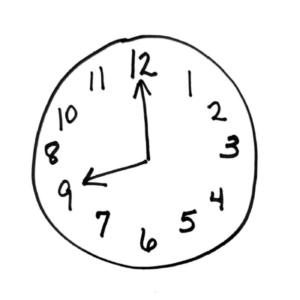
Beyond the Clock Test
About a year after the doctor brushed off my first request to have my husband’s memory evaluated, we were back in the office again. This time I asked the nurse, and she said, “Sure, we can order that.” That one simple yes changed everything.
The testing took half a day — drawing, questions, memory exercises. It was exhausting for him, and in a different way, for me. When the psychologist went over the results, he said he believed it was vascular dementia. He showed us the MRI, but the part that stayed with me wasn’t the diagnosis. It was the word he used: intrusions.
He explained that when someone can’t recall the real answer, the brain fills in the blank with something that makes sense — and then believes it.
He said Uno had far more intrusions than most people. “I stopped counting,” he told us.
That was the day I learned something that changed the way I saw everything: when he didn’t remember something, he wasn’t being stubborn or difficult — his brain was trying to protect him from the fear of not knowing.
And when someone can’t remember doing something, of course it must have been someone else. Me. Or an intruder. Or a stranger in the night. It wasn’t personal. It was the disease.
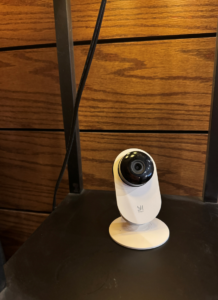
Which brings me to the cameras.
I didn’t install the first camera because I was afraid.
My husband had always been focused on security, long before dementia entered the picture. So when this new layer of confusion and suspicion appeared, it only reinforced his desire for cameras. I was the techy one, so I set them up — outside the house at first, the way he liked it.
We didn’t have any inside the house at that time. But after the testing, after the MRI, after the psychologist’s explanation of intrusions, something shifted in me. I had an idea, but how to make it happen?
I realized I needed a way to keep an eye on things when I couldn’t be right there. Not to monitor him — but to understand what was happening, to prevent accidents, to give myself a moment of peace.
So I put a camera in the living room.
When he asked about it, I told the truth creatively: “It’s part of the security system for the house.”
And it was. Just not in the way he thought.
I didn’t know it then, but that little camera was my first real act of self‑care.
Not the pretty kind.
Not the pampering kind.
The kind caregivers don’t even recognize as self-care because it looks like work: reducing stress, creating safety, giving yourself a moment to breathe.
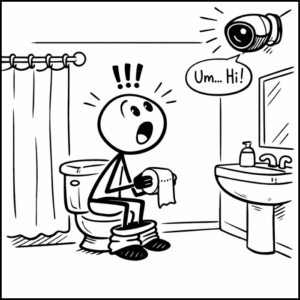
Over time, the cameras multiplied — not because I wanted a house full of gadgets, but because wandering became part of our daily life. Now when people come over, I just tell them, “Assume you’re on camera. I probably have a dozen of them, but none in the bathrooms.” It always gets a laugh, but it’s true. And it’s one of the ways I kept both of us safe.
I didn’t have the language for boundaries yet. I didn’t know how to ask for help. I didn’t know that caregiving would require me to adapt again and again — cameras, routines, creative truths, new systems, new ways of loving.
When my husband was first diagnosed, my daughter said to me, “Mom, don’t lose yourself taking care of him.” I didn’t understand then. That camera was the beginning.
I admitted again, even quietly to myself, “I can’t do this alone.”
Looking back, I can see it clearly: the camera wasn’t about surveillance. It was about surrender. It was about adapting. It was about love.
I didn’t learn about handling that anger for a few years. Yes years. It was gradual, with an aha moment here and there.
It was the first of many small pivots and adaptations that taught me how to care for him without disappearing myself.
* * *
This is the second in a series about the pivotal moments when the disease began shifting my focus.
If this story resonates with you, you can find the song I Still Say Yes To You on the Music page — links to all streaming platforms are there. And the lyric video is here: You Tube I Still Say Yes To You.
|
|
 |